Coogler’s acclaimed vampire box office hit changes the conversation around horror at the Academy.
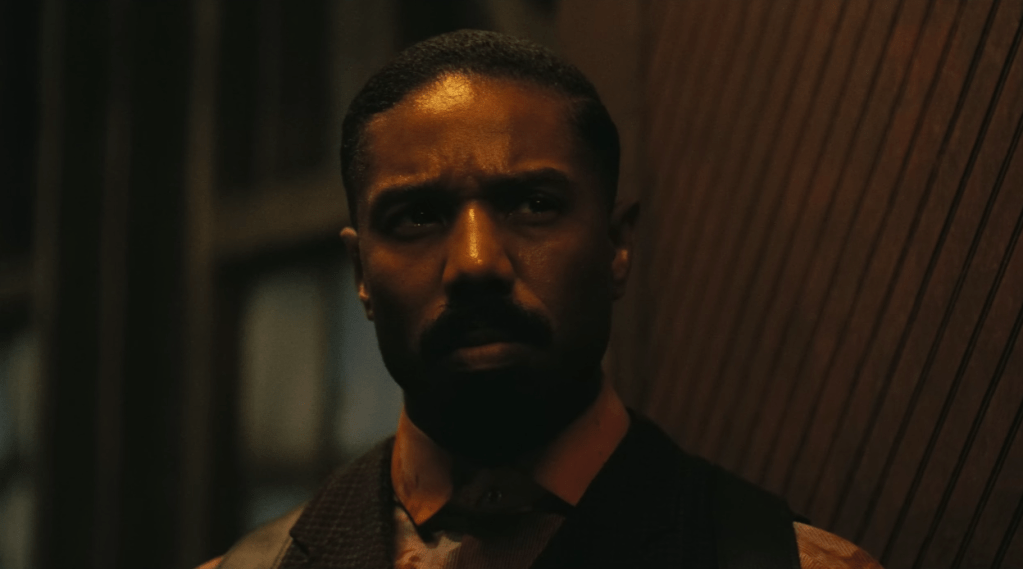
It was late on March 15. The Oscars ceremony was airing on ITV, and sleep-deprived, we were all on the edge of our seats, rooting for Sinners. A few quips about Timothée Chalamet’s PR disaster, multiple Michael B. Jordan’s, and a forced DiCaprio meme later, the awards began to roll out.
At first, it was bleak, One Battle After Another here, Frankenstein there, but eventually Sinners threw their hands up and took a few golden statues home.
Sinners is a genre-bending masterclass, weaving supernatural horror, a heist, and romance, with roots in Black American history. Meet twins Smoke and Stack (Michael B Jordan), who plan a night of festivity for the grand opening of their Mississippi juke joint, headlined by their cousin, Sammie (Miles Caton) – a blues prodigy. When the night comes, however, the revelry suddenly ends, and a trio of vampires led by Remmick (Jack O’Connell) try to siphon off Sammie, his musical talent, and the living, under a pretence of “fellowship”.
Seemingly, the 98th award show conveys a growing trend. Flicks like Sinners or underdog Zach Cregger’s Weapons are compelling enough to avoid the stigma that often accompanies traditional horror, such as prioritising jumpscares for a cheap thrill, as they are unique and creative. But why has the blood-sucker picture shaken up culture and voters the way it has?
The plot takes place in the Delta region of Clarksdale, Mississippi, in 1932, a southern state rife with Jim Crow laws (racial segregation) and rich in blues music history. At the time, to escape prejudice and in search of a better life, African Americans in the South left for Northern and Midwestern cities such as New York or Chicago. Cities that were free from Jim Crow. This was known as the Great Migration.
But despite the repeal of segregation, racism remained prevalent in these areas – a reason why the Twins left Chicago, their gang, and Al Capone behind, returning home. Stack, when Sammie asks about Chicago, reveals: “Chicago ain’t nothing but Mississippi with tall buildings.” Sammie, naive and young, thought the Black experience would be easier up there, but apparently, racism knows no bounds.
Coogler, exhausted after Wakanda Forever’s strenuous press run, told Variety that he would repeatedly play blues songs to relax, which reminded him of his late uncle, who loved the genre. It was while browsing through some records that he came across “Wang Wang Doodle” by Howling Wolf – the aforementioned phrase is Delta Mississippi slang for a celebration full of grooves and tunes, like the night at the Juke joint.
In an era of systemic oppression and racial injustice, Coogler wanted to show Mississippians having fun amidst troubling times, instead of struggle. To show the happier side of its people, and Sinners did that for a while. Perhaps, due to its themes of family and community, the Oscars have shown it so much appreciation.
Some call it overrated, others call it a spectacle. Elijah Bertram, a film and TV creator, shares what he loves about Sinners following its Oscar success: “The story itself is beautiful. It’s a story that celebrates a lot of black culture in different ways, through music, through experience, without necessarily being heavily trauma-centred.” He adds how it’s, “a very accessible story. You don’t need to know too much about black history to enjoy it.” Connecting viewers and voters alike to the picture.
Aside from its accessibility, Michael B. Jordan also gave the performance of his career, playing two characters at once, which garnered a lot of praise. Stack draped in red and Smoke layered in blue. Bertram says, “these two characters [Smoke and Stack] are very distinct beyond the costume.” He adds, “With the way he carried himself as the twins, you see who was speaking. He’s able to convey the different emotions through the microfacial expressions.
“You know who’s the leader, who’s more carefree, who’s been through more trauma, who’s had an easy life, who’s protected who? And you can see that difference in the way he conveys his emotions with his scene partners.”
He admits costume plays a major part: “Wearing tighter shoes when he was Smoke. And larger shoes when he was Stack, because Smoke is more on edge, so he doesn’t feel too comfortable. But as Stack, he needs to feel the room. So the way he presents himself changes based on the two”
Autumn Durald Arkapaw (the cinematographer) explained in an interview how Michael B. Jordan used a Halo Rig – a 360-degree camera attached to his body – to film the Moore brothers. B. Jordan told Rotten Tomatoes about shifting between a body double, a mark on the wall or no one at all, creating challenges for his castmates. Bertram concludes, “It’s a very distracting piece of equipment to be wearing.” he adds, “So for him to achieve a very near perfect performance with all that considered, I think, is worthy of the awards.”
On that note of awards, it’s time to discuss the history of Horror at the Oscars. To start, the first horror to win at the Academy was coincidentally in 1932, the year Sinners takes place, for Fredric March in Dr Jekyll and Mr Hyde, shared by Collide. But this was a major blip. Before, horror was more likely to appear in the technical or production categories, such as Special Effects for The Invisible Man or Best Makeup for Beetlejuice.
Some others are Black Swan, getting five nominations, and securing Natalie Portman the Best Actress trophy. Jaws for Best film editing, Best Original dramatic score, and Best sound. And Get Out, winning Jordan Peele Best screenplay. But the standout is Johnathan Demme’s The Silence of the Lambs, which remains the only horror movie to win the top five categories: Best picture, Best Actor, Best Actress, Best Original screenplay (Ted tally) and Best director.
Sinners is the most Oscar-nominated film of all time with 16, and left the show with 4 awards: Best Actor for Michael B. Jordan, Best Original Screenplay for Coogler, Best Cinematography for Arkapaw, and Best Score for Ludwig Goransson, Coogler’s collaborator since university. Arkapaw was the first woman to use 65mm film and to win Best Cinematography. It’s more heartwarming that she is a woman of colour as well.
Shamoon Saeed, entertainment content creator, says, “it received so many nominations because of the original filmmaking, great cast performances and audiences truly enjoyed the film.” He shares, “It’s successful because it wasn’t something you’d seen beforehand, and it was made with a strong direction. If someone didn’t even like the film, they’d still appreciate the level of filmmaking that it was.”
This touches on an important point. In a time full of sequels and predictable slashers, Sinners stands out. He explains, “It’s very unique for the vampire genre. It’s not like anything ever seen before and that [originality] is one of the reasons why,” it stood out.
Music is also integral to this film, and its use is very intentional, setting it apart from the rest. The composer, Ludwig Goranson, understood the cultural weight that blues has in Mississippi and all of the songs are appropriate for the time period. Sammie (Miles Caton) showcased his vocal chops on “I lied to you” in the surreal, but iconic Juke Joint sequence, tying past, present, and future together with electric guitars, ballerinas, hip-hop dancers, and African tribal dancers.
It’s also intriguing that all the original songs performed by Black actors in the film are original. Whereas Remmick and his cronies’ Irish folk songs like “Pick poor Robin clean” are pre-existing, bringing parallels to a long history of Black music stolen by White musicians. Goranson also uses the strings in “Dangerous” by Hailee Steinfeld (Mary) to add tension, consistent with horror.
Horror was also represented in a major category with Weapons, a film with the premise of 17 school children from the same class disappearing from their homes, and all eyes lay on their teacher. Amy Madigan won Best Supporting Actress for her role as the kooky witch, Aunt Gladys, a character who brings discomfort wherever she goes. Saeed says, “in terms of the horror genre, we’ve seen so many amazing projects.” Adding that Madigan’s merit, “was well deserved, considering her performance was so good. I loved that film.”
Following Sinner’s success, Coogler has been cooking up an X-Files reboot starring former EastEnders actor, Himesh Patel, and Danielle Deadwyler, also Black Panther’s third installment down the line. But the historical vampiric tale is full of beautiful technical elements, originality and lore, which have resonated with audiences across the globe, leaving no choice but for the Academy to recognise its greatness. And Michael B Jordan winning during Chalamet’s ballet-opera debacle sweetened the deal. Sinners has opened the door for other multifaceted Black horror stories to reach the highest level of acclaim. Maybe we’ll see more in the future. Time will tell.
 Reuben Williams